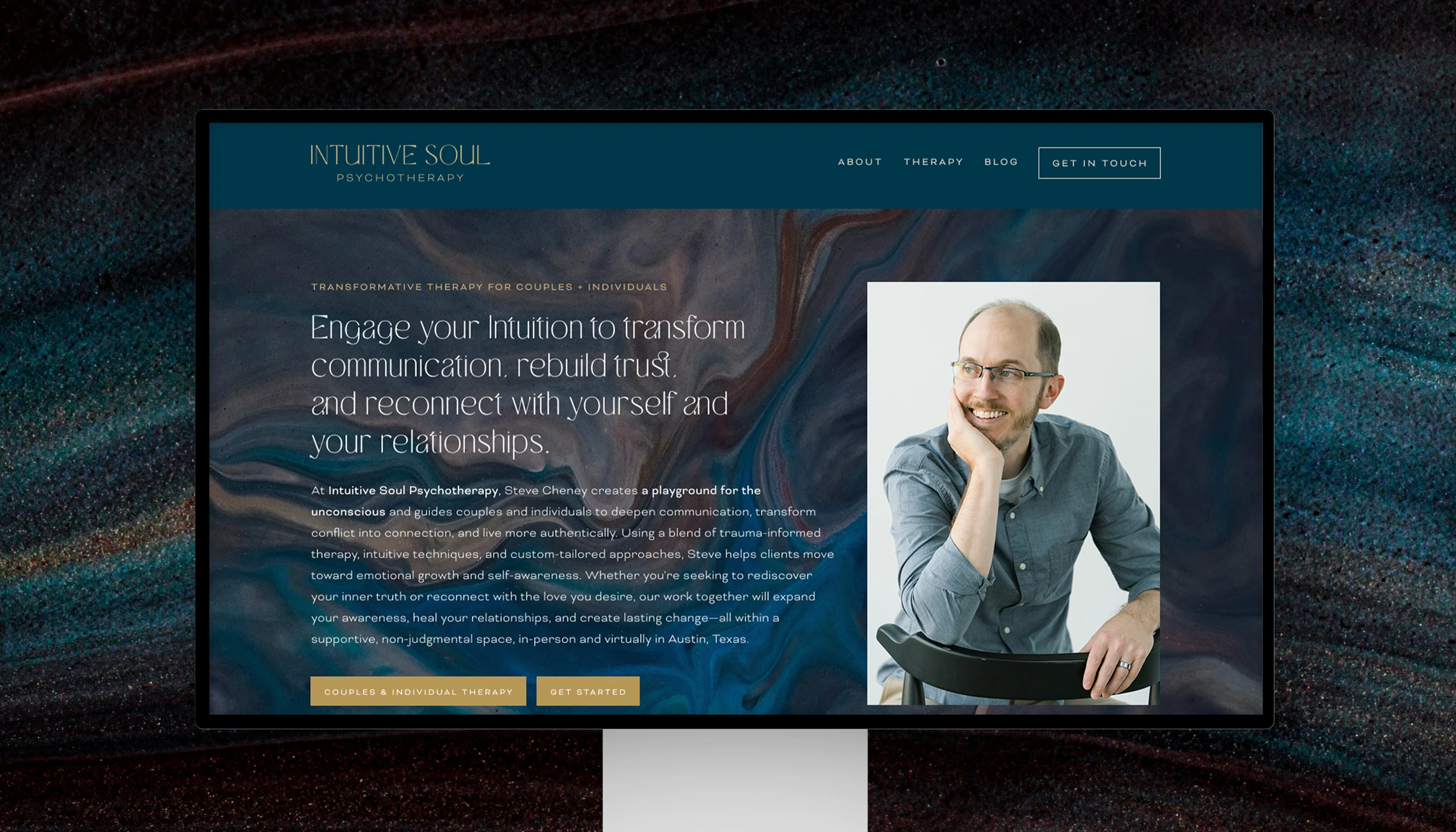
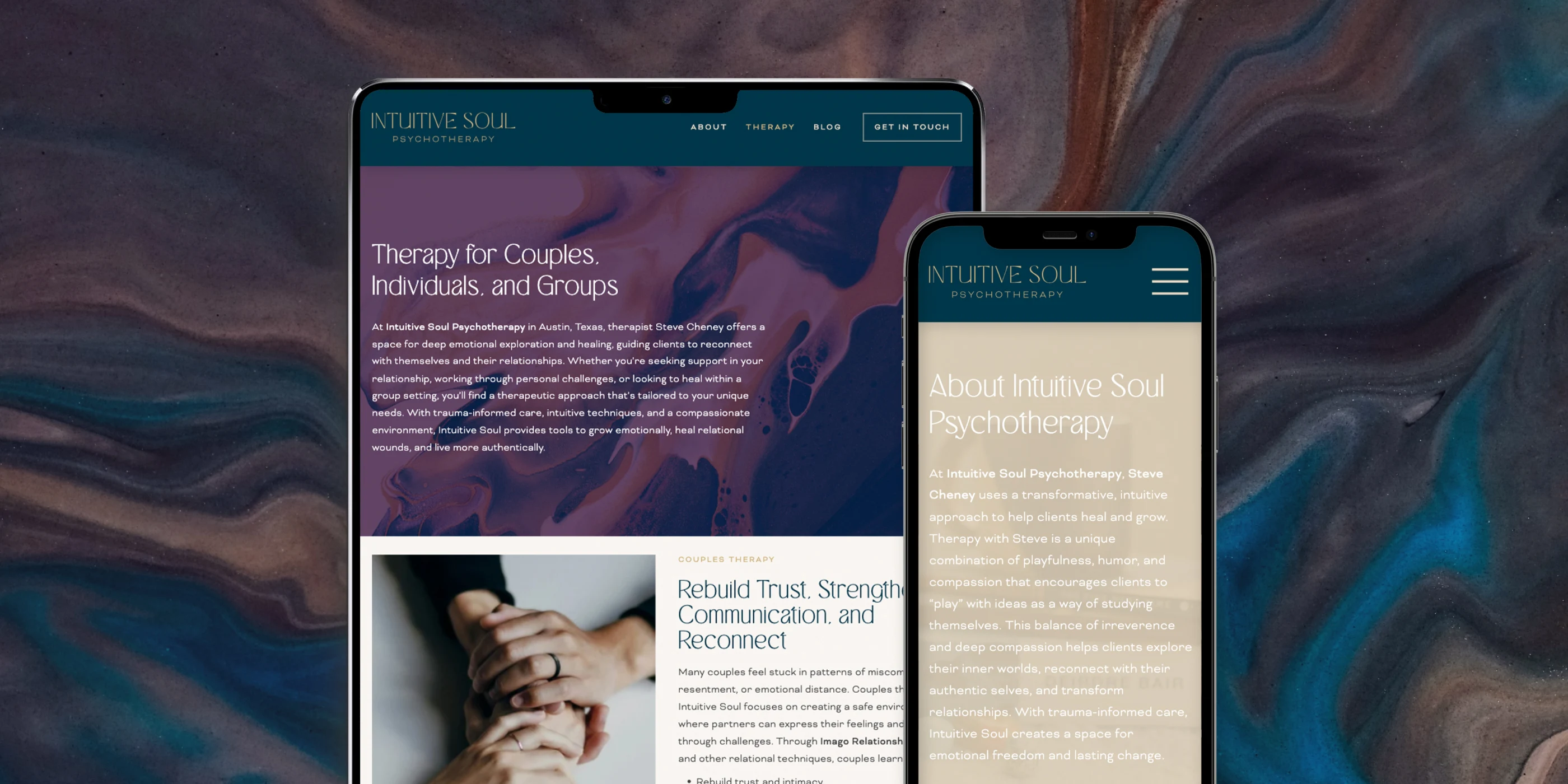
Steve Cheney had built a strong practice, a Licensed Professional Counselor certified in Imago Relationship Therapy, formerly the clinical director at Deep Eddy Psychotherapy, now running his own couples, individual, and group therapy practice in Austin. What he hadn't built yet was a name or a brand that said any of that. His business was still called Steve Cheney Therapy, he was managing his own website, and he wasn't sure how to describe what made his approach different from any other couples therapist in Westlake.
The clarity came from the work itself. Partway through DesignGood's process, Steve landed on a new name, Intuitive Soul Psychotherapy, and a line he'd been circling for years, a playground for the unconscious. Both were already true. Steve pairs his clinical training, Imago Relationship Therapy, trauma-informed care, psychodynamic and shadow work, with a real belief that curiosity and play belong in the therapy room, not just insight and technique.
That combination is easy to get wrong in either direction. Too clinical, and the part of Steve's work that actually draws people in, his intuition, his willingness to play with a feeling instead of fixing it, disappears. Too playful, and a couple deciding whether to trust a stranger with their marriage has no way to see the training underneath it. His audience needed to see both: the couple who has said we need a neutral third party for years, and the sharp, successful individual who was praised for being useful and never asked what they actually wanted.
DesignGood built Intuitive Soul Psychotherapy's brand language and positioning first, then the identity and website around it, using Steve's own words for the work rather than generic therapy language. The site names his credentials plainly, Imago Relationship Therapy, trauma-informed care, the couples workshops he runs with his wife, Emily Harrington-Cheney, and it carries the phrase Steve wrote himself, a playground for the unconscious, because it was already exactly right.